
This week my craft work included showing characters’ emotions. Still drawing from the 12 Fatal Flaws, I battled with how a girl in Dahomey in 1760 or so might tell her mother that she didn’t want to be married off right after reaching puberty. The very premise stretches credibility. This was a highly structured, polygamous society with well defined roles, especially for females. Fathers found husbands for daughters and sons-in-law in return helped the wife’s parents with plowing and other heavy chores.
My character waits for a time when she and her mother are alone, preparing the evening meal. They have discussed this before; so the mother, while caught off-guard, is not entirely surprised. The mother tries to cut the discussion off, but the daughter persists and ends by swearing to find a way to convince her parents to let her wait until she finds a man that she herself will choose. Of course, for drama, she puts an exclamation point on it by throwing the last yam in the cooking pot before storming off.
I know it sounds a little twenty-first century, but women are women and I have to think there must have been some high-spirited creatures who would have wanted to live life their own way. Lots of opportunity here to weave in thoughts and actions while practicing the rule of never naming an emotion. Besides, this is fiction. It can be any way I want it to be if I write well enough to convince my readers and keep them turning the pages.
My history study focused on Thomas Jefferson. I had read before about his early support for the abolition of slavery. The book I am reading now makes
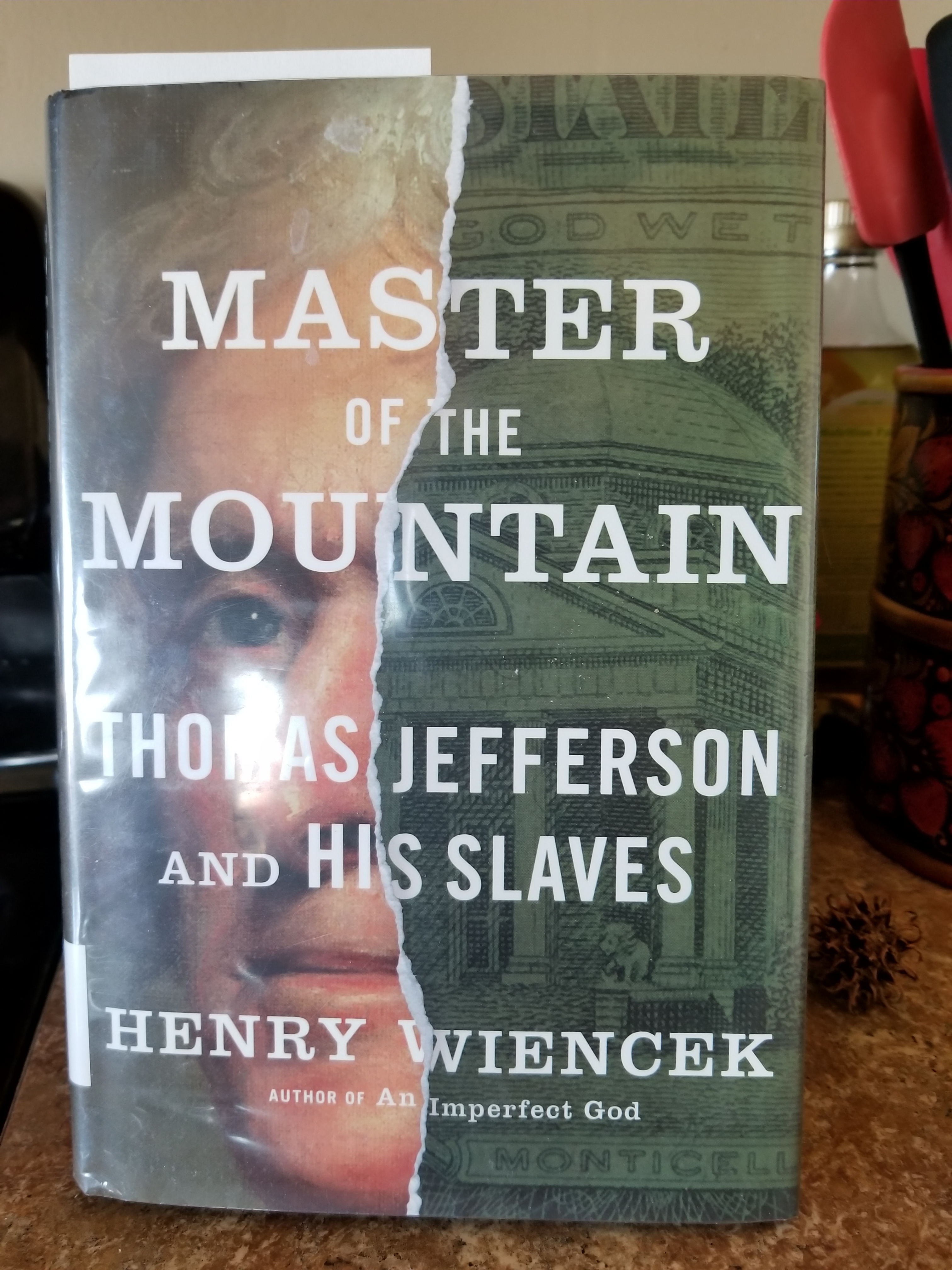
clear that his thinking gradually evolved. In his Notes on the State of Virginia, which he wrote in 1781, he strayed far from his early anti-slavery stance to make clear that he considered blacks to be inferior to whites in “reason and imagination” and almost every sense, suggesting even that they had different sweat glands, which made them smell different. He argued vehemently against “contamination of the blood”, in spite of his own circumstances. By the time he wrote Notes he was deeply involved with his slave mistress, with whom over the years he had six children; and this same mistress was the half sister of his wife. For a further complication, a branch of his family, the Randolphs, were said to have descended from Pocahontas, and showed the mixture in their swarthy complexions.
All of this played out in the background of the debate on the Declaration of Independence. One of Jefferson’s colleagues, George Mason, suggested a line that would have ended slavery forever. In the end, different ideas about race and the meaning of freedom caused it to be voted out. We are still experiencing the consequences today.
 The Plot Thickens